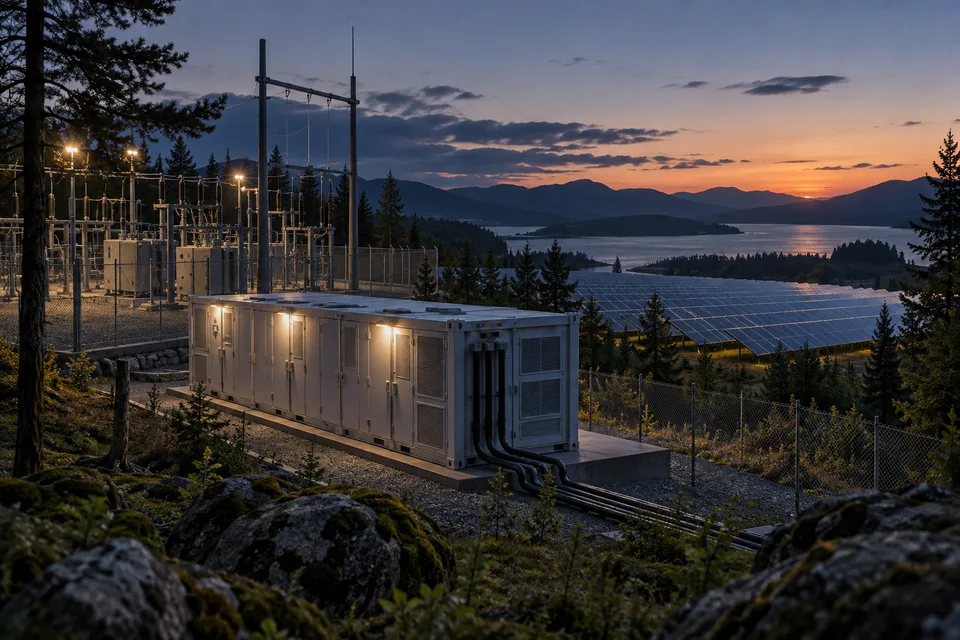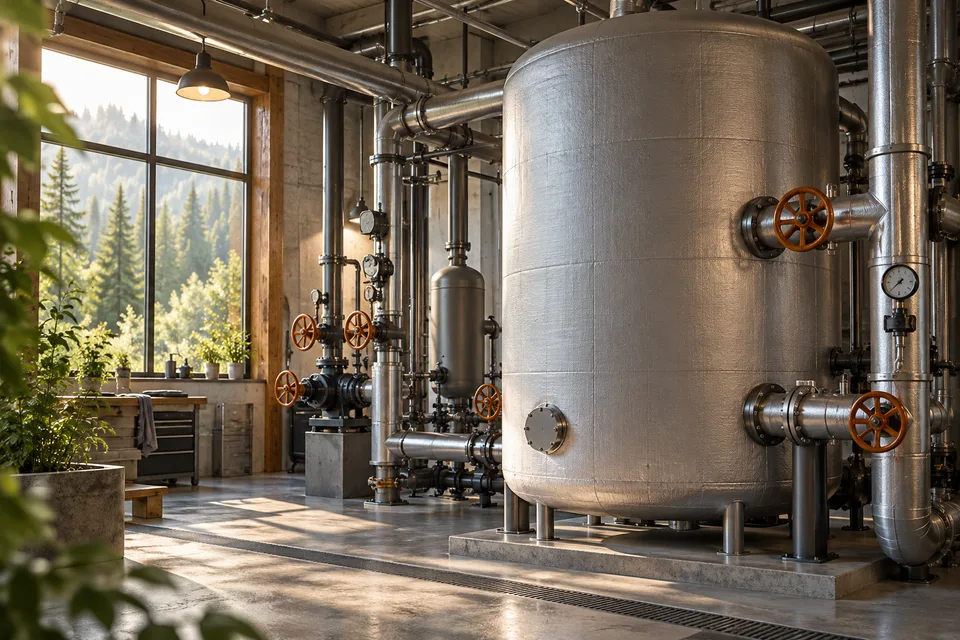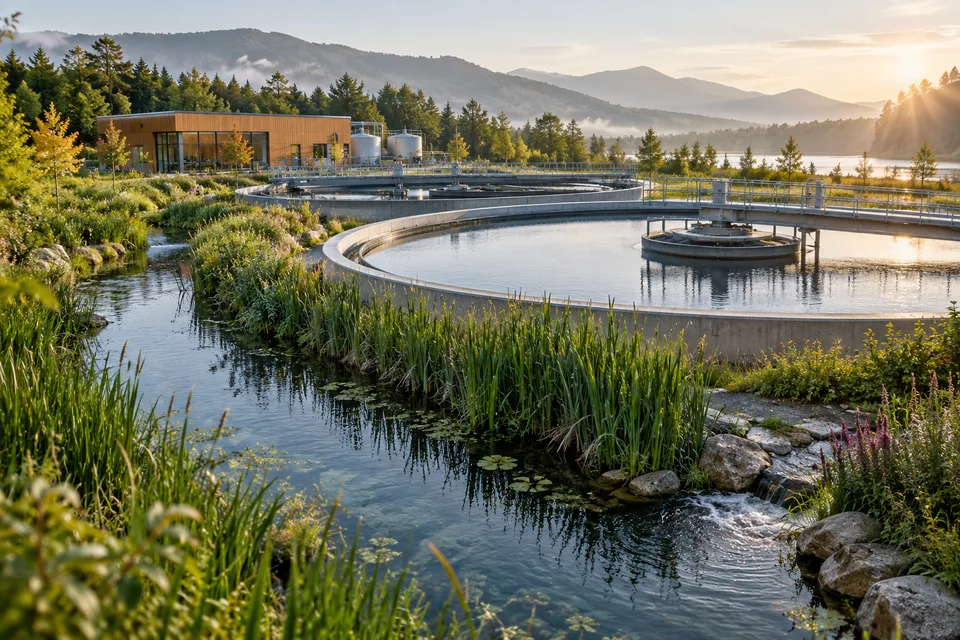
The compelling picture of water reuse is a circle. Water enters a city, serves its households and businesses, passes through treatment and becomes useful again. The line closes. A resource that looked like waste becomes part of the supply.
But a circle is an unusually forgiving diagram. It has no industrial discharge arriving unexpectedly, no instrument awaiting calibration and no disagreement about which organization must respond to a warning. It cannot show whether the public will hear about an interruption before a reassuring monthly report is published. Closing the physical loop leaves these questions open unless the institutions close them too.
Two established examples help replace the abstract circle with a working route. Orange County, California, returns highly purified water to a groundwater system. Singapore’s NEWater program supplies high-grade recycled water within a broader national water strategy. Their histories and arrangements differ; neither is a kit that another city can copy without local design and approval. Both make a more useful starting point than the idea of a single miraculous filter.
Before the treatment plant
Begin upstream, where used water is collected. Its composition reflects what homes, businesses and other connected users put into the system. The eventual purification plant must receive water it is designed and operated to handle. That makes source control part of the reuse project, rather than an unrelated wastewater obligation that ends at the gate.
The EPA’s 2017 Potable Reuse Compendium describes source control as an element of a multiple-barrier approach. It asks whether programs developed for discharge to the environment are adequate when the system is connected to potable reuse. The question matters because a new destination can change what must be understood and controlled upstream.
For a city evaluating reuse, the practical implication is organizational. The team promoting a new supply needs a relationship with the people overseeing discharges, collection and conventional wastewater treatment. Information must travel across those boundaries. A treatment agreement that assumes a stable incoming stream needs a way to identify significant changes and respond to them.
This is also where a procurement-only view becomes inadequate. Buying advanced equipment does not automatically establish who inspects connected businesses, how an unusual discharge is reported or who can require a corrective action. Those responsibilities may already exist in local institutions. They still need to be checked against the proposed reuse scheme rather than presumed to fit it.
At the membranes
Orange County’s Groundwater Replenishment System explanation describes a sequence after treatment by its sanitation-district partner: microfiltration, reverse osmosis, then ultraviolet light with hydrogen peroxide. The district reports a design production capacity of 130 million gallons a day following its final expansion in 2023. That is a capacity statement, not evidence that the plant produces exactly that amount every day.
The district’s process account gives the stages different jobs. Microfiltration removes suspended particles and microorganisms such as protozoa and bacteria, preparing the water for reverse osmosis. Reverse osmosis uses pressure across membranes to separate water from dissolved constituents. UV with hydrogen peroxide adds disinfection and advanced oxidation of trace organics that may pass the membranes. It is a treatment train, not three interchangeable names for a filter.
That last distinction matters when a proposal changes a component. A different membrane, an altered feed or an unavailable downstream stage needs evaluation against the complete approved process. The fact that product water looks clear cannot substitute for knowing which barriers are operating and what they are required to do.
A membrane is also an operating component. Its presence on a process drawing does not by itself establish its condition, the performance of adjacent equipment or what happens when the process leaves its validated operating range. A credible system connects design capability to operating limits, monitoring and response.
That distinction separates confidence from a demand for blind trust. Confidence comes from evidence that a defined process is working, plus an arrangement that detects and handles deviations. It does not require the claim that equipment can never fail. Such a claim would remove the very reason for maintaining barriers and an operating response.
The plant also has streams besides its main product. Concentrated residuals and other outputs need an appropriate management route. An attractive loop that draws only useful water can conceal these flows. Their handling belongs in the environmental and economic assessment, rather than being treated as something outside the reuse project because it leaves through a different pipe.
Where the water goes next
Orange County’s scheme is an example of indirect potable reuse. Water is returned to the groundwater basin before later extraction by water suppliers. The district’s water-delivery account distinguishes recharge basins from injection used to help resist seawater intrusion. The environmental setting is therefore an actively managed part of the system, not an empty space between treatment and consumption.
The EPA distinguishes indirect and direct potable reuse by whether an environmental buffer is involved. Those categories help describe the route. They do not, on their own, rank every project by safety, cost or suitability. Each proposal needs its own treatment design, source assessment, operating framework and applicable approvals.
Singapore shows why the destination cannot be inferred from the word recycled. PUB describes NEWater as used mainly for industry and air-conditioning cooling, delivered to industrial users through a dedicated network. For indirect potable use during dry periods, NEWater is blended into reservoirs; that raw water is treated at waterworks before reaching consumers. Industrial supply and indirect potable supply are therefore different routes inside the same program.
An environmental buffer has characteristics that need to be understood. A groundwater basin is not simply a clean storage tank: hydraulics, other inputs and management affect its role. A reservoir is another setting again. The buffer’s function needs project-specific evidence; its presence is not a complete treatment specification.
Direct reuse changes the route and the time available for some responses. It does not mean that used water is casually connected to a tap. The relevant comparison is between complete, approved systems, including their safeguards, rather than between emotionally charged descriptions of the starting material.
California’s direct-potable-reuse regulations page records an effective date of 1 October 2024. This establishes a regulatory pathway in that jurisdiction. It is not a blanket authorization for every proposed plant, nor evidence that every project discussed since then is already supplying drinking water. A rule, a permit, a constructed facility and operating delivery are different milestones.
At the monitoring desk
A visitor sees clear water. An operator needs more than appearance. The relevant evidence includes process measurements, laboratory analysis, instrument condition and records of how the system responded when something changed. Each tells part of the story, and each has limits.
Singapore’s PUB water-quality explanation says NEWater is tracked across its supply chain through a program monitoring about 300 parameters. It describes laboratory accreditation and source-to-tap oversight more broadly. The important lesson is the continuing program around production, rather than treating an initial demonstration as permanent proof of every future batch.
A dashboard should make the difference between continuous process indicators and periodically analyzed samples understandable. A fast signal can help detect a change without directly measuring every possible constituent at every instant. A laboratory result can provide detailed evidence while arriving on a different timetable. Public communication should not collapse these into a fictional promise of continuous measurement of everything.
The response is as important as the signal. A monitoring system needs an identified action when a limit is crossed, a sensor becomes unavailable or confidence in a measurement is lost. Depending on the approved design, that can involve preventing water from proceeding through the intended supply route. The exact arrangement is a project-specific engineering and regulatory matter; the public should still be able to learn who is responsible for it.
Routine success can make this operating discipline less visible. Years of dependable service may produce pressure to regard monitoring as an administrative burden. In fact, the evidence is part of why that service can be trusted. Removing the record while continuing to advertise the historic result would confuse an established process with a remembered achievement.
At the bill and the public meeting
Water reuse adds a local resource, but “local” does not mean free of dependencies. Energy, chemicals, equipment, skilled operators and maintenance all enter the service. A project assessment needs the cost of keeping the system dependable, not only the cost of constructing the attractive part of it.
The comparison also needs a realistic alternative. Reuse may be considered alongside conservation, imported supply, storage, desalination or other measures, depending on the location. Comparing it with an imaginary unlimited cheap source tells a city little. Comparing only construction prices omits operating conditions and reliability. The useful question is what each feasible portfolio provides, at what cost and with which risks.
Capacity requires a similar discipline. A plant’s maximum output is not the same as dependable annual supply. Maintenance, incoming water, demand, storage and other constraints influence delivery. Conservation can also change the quantity and characteristics of water reaching a treatment system. That does not make the two strategies enemies; it makes joint planning necessary.
Residents deserve an explanation of these trade-offs before the project is presented as an inevitable technical answer. A public process should allow questions about reliability, costs and oversight to be answered on their merits. Dismissing concern as mere discomfort with the starting material can miss legitimate questions about how an institution will operate.
| The physical handoff | The accompanying public obligation |
|---|---|
| Used water enters collection | Understand and manage what enters the system |
| Water passes treatment barriers | Demonstrate performance and maintain the equipment |
| Product water enters its next route | Operate within the approved destination and conditions |
| Measurements reach an operator | Connect signals to a defined response |
| Water becomes a supply service | Report delivery, costs and deviations intelligibly |
This is not a universal compliance checklist. It is a way of reading a proposal without allowing the pipes to conceal the decisions. The specific standards and approvals belong to the relevant jurisdiction and project.
When the loop is interrupted
Imagine a hypothetical plant that temporarily diverts its product because an operating condition cannot be confirmed. The diversion reduces immediate output. In a badly designed public narrative, that might look like an embarrassing contradiction of the plant’s reliability claim. In a better narrative, the response can be understood as part of the safeguards working as intended, while the cause and consequences are investigated.
That does not mean every interruption is acceptable or every response adequate. Frequency, duration, cause and impact matter. A recurring problem deserves a different assessment from an isolated event handled within an approved plan. The point is to report the event in a framework that allows people to distinguish those situations.
Other suppliers and emergency arrangements belong in the same account. A city rarely wants its entire water service to depend on one process never stopping. A portfolio can provide options, but only if those options are physically and institutionally available when needed. A backup named in a presentation is not automatically a backup ready to operate.
There is a final accountability test: can a resident distinguish the water agency’s claim from an independent review of it? Operators hold essential firsthand knowledge, and their reports deserve careful reading. Regulatory oversight, external expertise and public records provide different perspectives. Citing only a promotional summary leaves those roles blurred. A mature project should make the underlying evidence easier to find as its service expands, rather than expect a larger audience to accept a shorter explanation.
The circle is still a useful image. It captures the possibility of using water again instead of discarding its value after one journey. The more honest version draws operators, regulators, upstream users and the public alongside the line. Reuse becomes dependable when responsibility travels all the way around it.
Sources & context
This article draws on the sources linked in the text. Analysis and illustrative scenarios are identified separately from reported findings.
- EPA's 2017 Potable Reuse Compendium
- Groundwater Replenishment System explanation
- process account
- water-delivery account
- EPA distinguishes indirect and direct potable reuse
- PUB describes NEWater as used mainly for industry and air-conditioning cooling
- direct-potable-reuse regulations page
- PUB water-quality explanation